Metaenga wins first place at Kyiv City Accelerator 2026
Metaenga took first place among 26 startups at the Kyiv City Accelerator 2026 Demo Day on 6 November. Our idea: let industrial teams practise their hardest procedures in VR or in a browser before they touch real equipment, and see the results on a web dashboard.

Participants and organisers of Kyiv City Accelerator 2026 at Demo Day in Kyiv, 6 November 2026
First of 26 startups The jury ranked Metaenga the top startup and awarded the team a diploma.
Training is the gap Kyiv manufacturers asked for faster operator training and onboarding of new staff.
Built, not pitched We built web-based trainings for their machines and showed them live.
First out of 26
On 6 November, 26 startups pitched for five minutes each. The jury included representatives of the participating enterprises, the organisers, investors and a journalist. They selected the three strongest teams.

Hands-on training in VR and in the browser, with web analytics of results
A "factory in a container" that turns CO₂ from flue gases into building materials
Concrete from construction, industrial and farm waste, reinforced with basalt fibre
Other teams were also recognised. The organisers closed by stressing the importance of patenting and protecting IP.
About the programme
Kyiv City Accelerator 2026 brings the city's industrial companies together with startups and researchers to solve specific production and business problems. Companies describe what holds them back. Teams propose technology and work out with them how to apply it.
The "Industrial Hackathon + Acceleration" programme was commissioned by the Department of Industry and Entrepreneurship Development of the Kyiv City State Administration. It was run by ISE Group and ISE Corporate Accelerator together with Academ.City and Kyiv Academic University. ISE is ranked #30 in the Financial Times list of Europe's Leading Start-Up Hubs 2026.
Enterprises presented their challenges, then met teams one to one for the rest of the day.
Online sessions on finance, grants, Creative AI, negotiations, investment and pitching.
26 startups, a five-minute pitch each, and a jury choosing the three strongest teams.
What enterprises asked for
Eleven companies took the stage at the hackathon and brought more than 60 specific challenges: packaging and label printers, machine builders, metalworkers, a telecom infrastructure contractor, compressor and building-materials producers. Most requests were about energy efficiency, automation, robotics and ERP. But a clear second theme ran through the list: people. Seven challenges were about finding, training and keeping skilled staff.
One pharmaceutical packaging producer said that training an operator for complex printing equipment takes from about six months to five years, depending on the operation. Others asked how to onboard new staff faster, keep the knowledge of experienced operators, prepare welders despite a shortage of workers, and train crews for safe work at height.
These are exactly the problems Metaenga was built for: long time to competence, training tied to a live production line, and a high cost of mistakes.
A training platform for industrial teams
Metaenga is an immersive training platform for industrial staff. Workers practise real procedures in a simulated environment, and supervisors see how each session went. We built the pitch around three problems every plant manager in the room recognised.
Learning on real machines can damage equipment and stop the line.
Mastering a procedure takes both the trainee's and a mentor's time.
Know-how sits with experienced staff and rarely reaches the manuals.
One platform, three ways to train
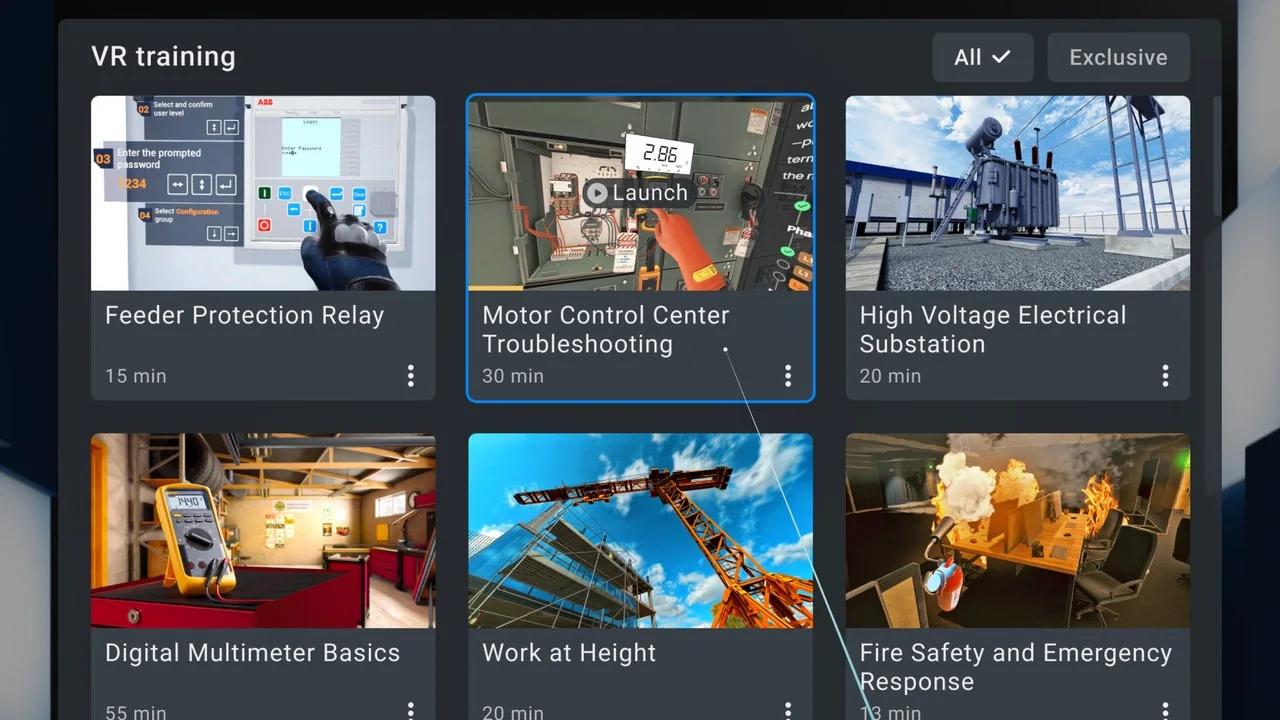
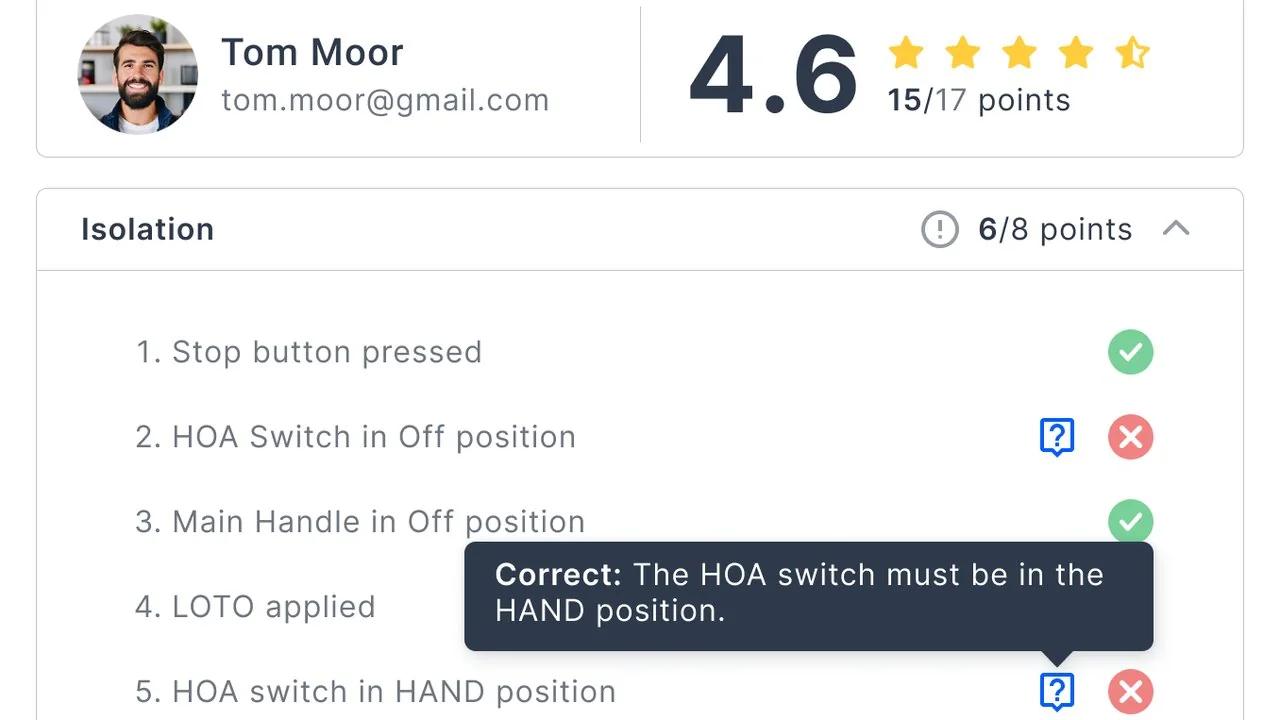
The same procedure can run as a VR training for hands-on practice (for example energy isolation and LOTO), as a web-based training that needs no headset, and through a web platform where managers assign training and track progress. Every session records completion time, an overall score and results for each stage.
Hands-on practice in a headset, with real tools and consequences.
Interactive 3D in any browser, with no headset or installation.
Assign training, track scores and see who is ready to work.
Clients shown in the pitch include energy and construction companies such as EDP, BESIX, Nexans and DTEK, plus leading universities.
Interactive web-based training
We did not want to sell a slide. For every company that listed staff training among its challenges, we built a web-based training around its own equipment or procedure. All six run in one product, right in the browser: the trainee picks a procedure, goes through it step by step and gets a result at the end.
After the enterprise presentations we spoke with almost every participating company and opened the trainings on a laptop right there. Several companies called Metaenga an interesting fit for their operations.
Step by step, with hints
Fewer hints, real choices
No hints, a final score at the end
Faults and failures
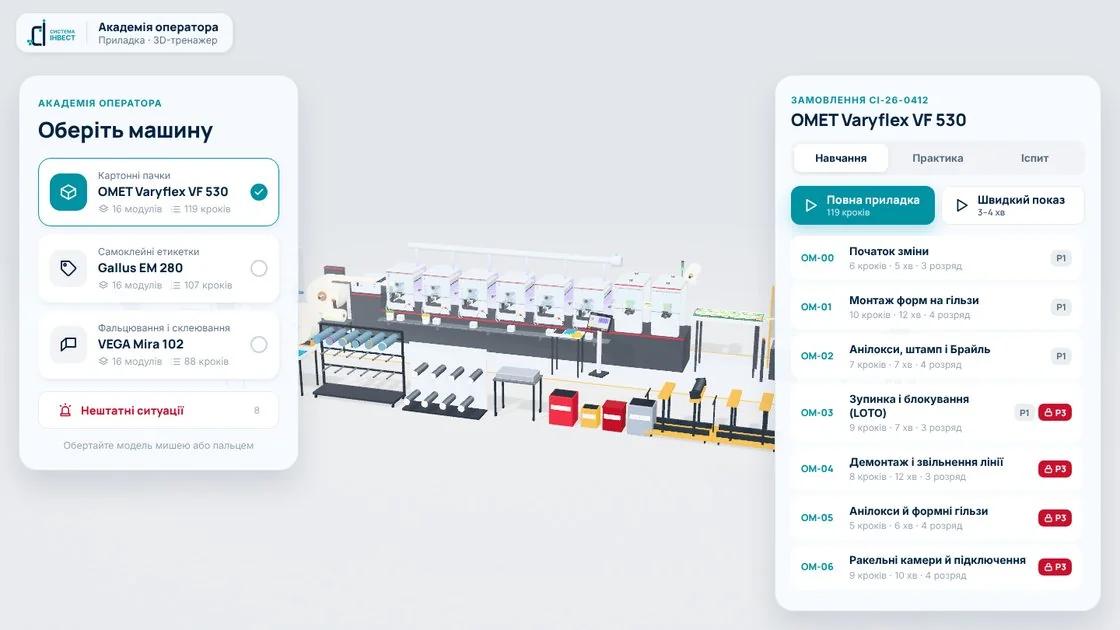
Inspect units, load material, set parameters, test run and find defects.
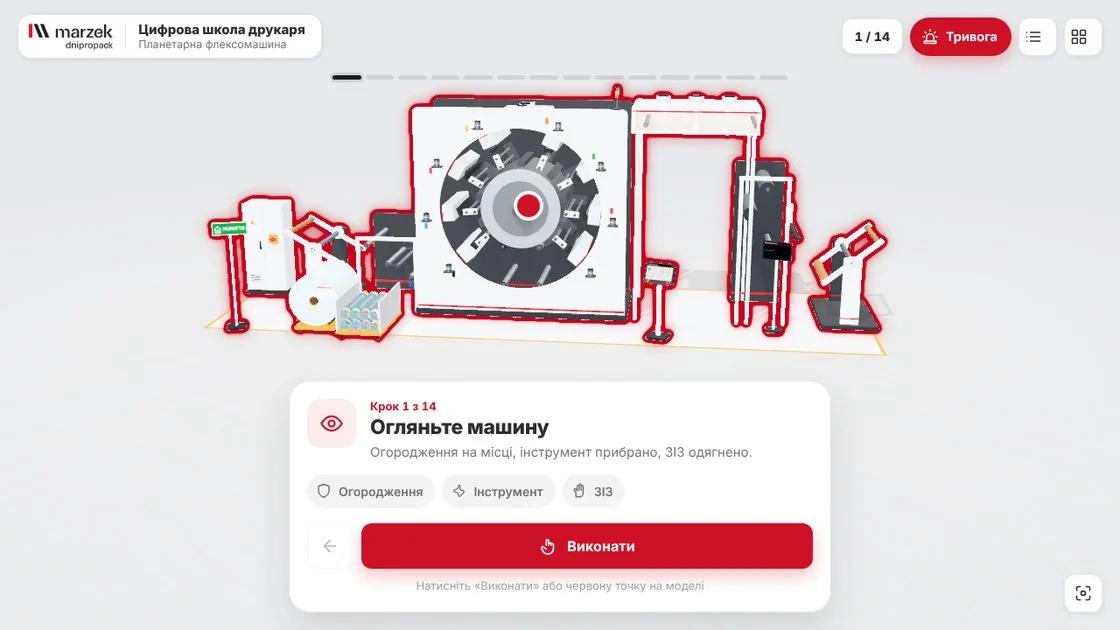
Prepare the press, lock out power, install and adjust, then launch.
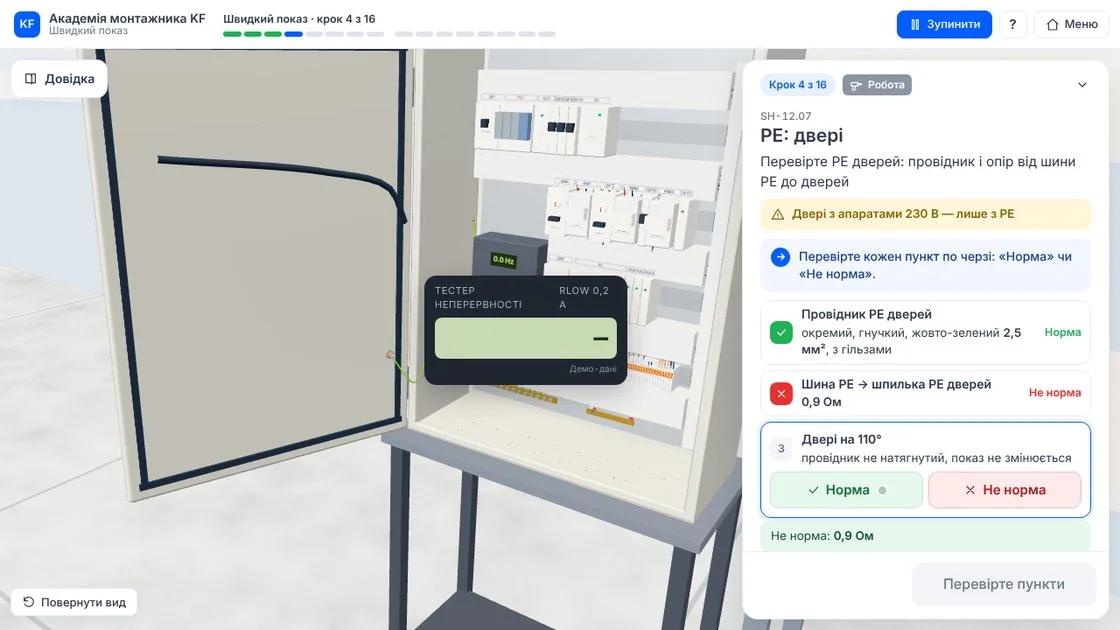
Read the task, perform key actions, then measure and verify the result.
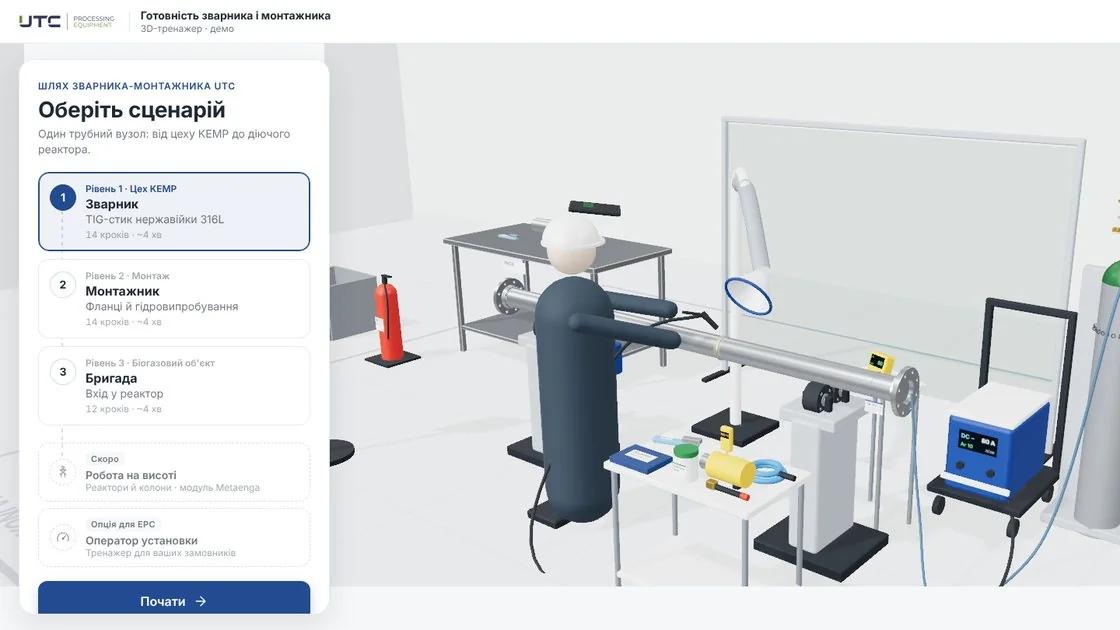
Check the area, inspect PPE, prepare equipment and run pre-start checks.
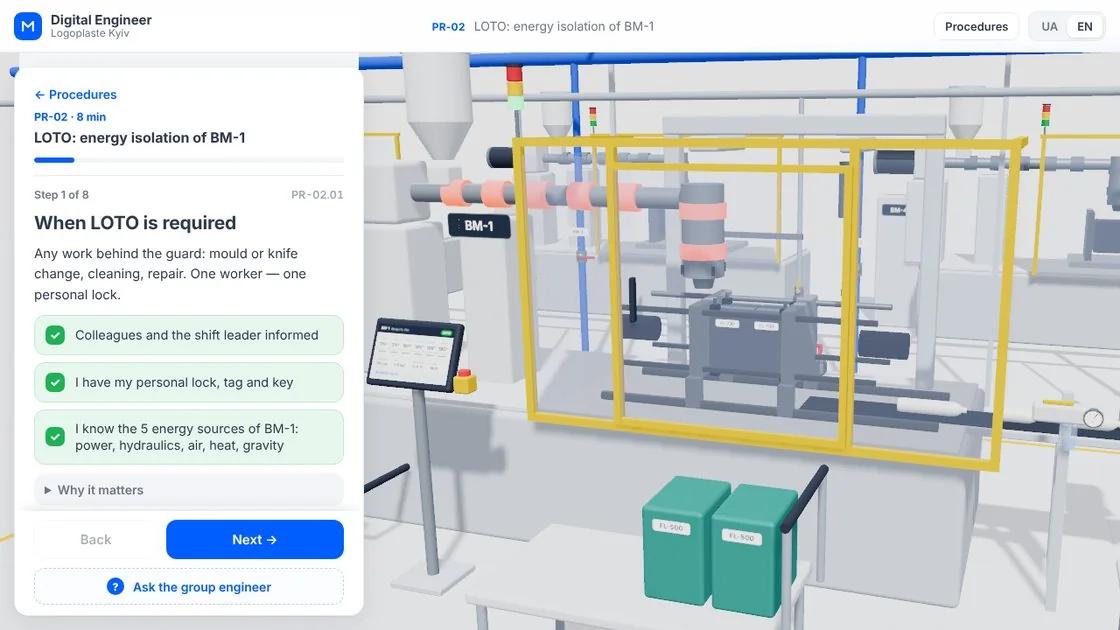
Stop the cycle, switch off the main isolator, then lock and tag out.
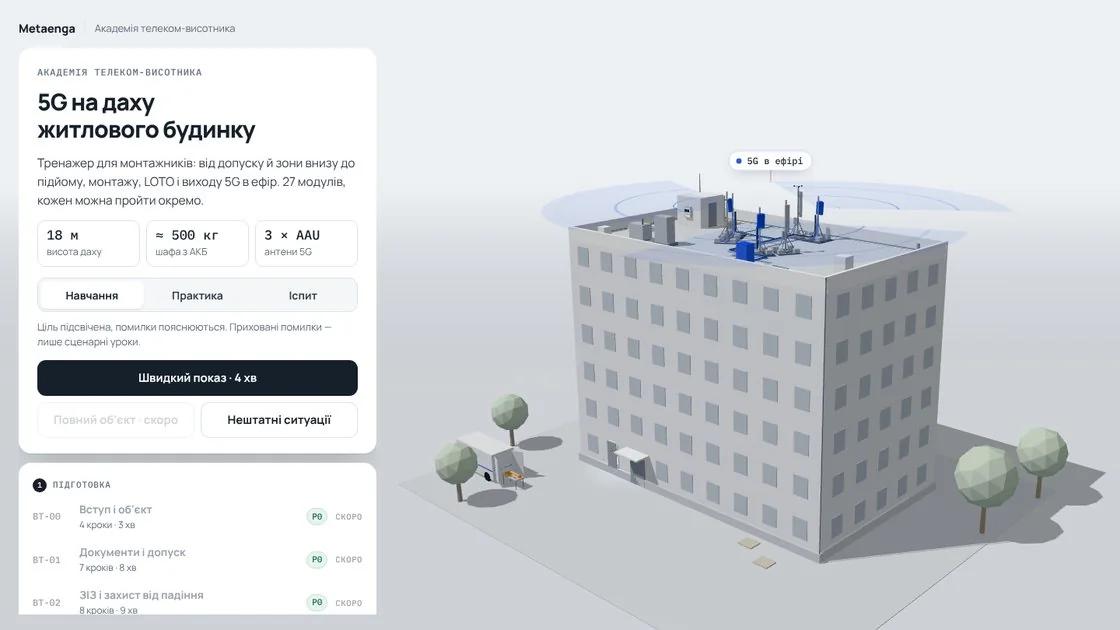
Access the roof safely, work at height, mount and connect equipment.
From procedure to live training in about 3 weeks
We also showed how a custom training is built. It starts with one question we asked every company: which procedure is hardest for your team to learn?
Instructions, videos, H&S input
Actions, interactions and checks
3D, logic and voice guidance
Trial with 5–10 operators
Team access and session guidance
Why it matters
The hackathon confirmed what we see with energy clients: the bottleneck is often not the machine but the time it takes a person to run it safely. When training ties up a live line and a senior operator, every new hire costs output.
Practice moves off the live line: no downtime, no damaged equipment, clear readiness data.
Their know-how becomes a scenario every new hire can repeat, instead of leaving with them.
What we built for energy carries over to printing, welding and machine building as is.
The programme also gave us direct access to Kyiv manufacturers. After the hackathon we sent each company our presentation and a link to its training. Conversations are continuing.
We thank ISE Group, ISE Corporate Accelerator, the Kyiv City State Administration, Academ.City, Kyiv Academic University, the jury and every enterprise that shared its challenges openly.
Questions about Kyiv City Accelerator 2026
What is Kyiv City Accelerator 2026?
Kyiv City Accelerator 2026 is an industrial hackathon and acceleration programme that connects Kyiv manufacturers with startups and researchers. It was commissioned by the Kyiv City State Administration and run by ISE Group and ISE Corporate Accelerator with Academ.City and Kyiv Academic University. Eleven Kyiv manufacturers brought more than 60 challenges. It included a hackathon on 2 October, an online acceleration track in October and a Demo Day on 6 November 2026.
Which startup won Kyiv City Accelerator 2026?
Metaenga took first place among 26 startups at the Demo Day on 6 November 2026. The jury of enterprise representatives, organisers, investors and a journalist ranked EcoMur DFC second and the Frantsevich Institute for Problems of Materials Science of the NAS of Ukraine third.
What did Metaenga present at Kyiv City Accelerator 2026?
Metaenga presented its training platform for industrial teams: VR training in a headset, interactive web-based training in a browser, and a web platform where managers assign training and see scores per stage. For the hackathon it built six web-based trainings around participating companies' own equipment, including a printing line, a flexo press, a control cabinet, welding, LOTO on a blow-moulder and 5G rooftop installation.
What is web-based training in Metaenga?
Web-based training is an interactive 3D procedure that runs in any browser, with no headset or installation. The trainee picks a procedure, goes through it step by step and gets a result at the end. Modes include Learn with hints, Practise with fewer hints, Exam without hints, and Emergencies with faults and abnormal situations.
How long does Metaenga take to build a custom training?
About three weeks from procedure to live training. Metaenga studies the company's instructions and procedure videos, agrees the scenario, builds the 3D training with logic and voice guidance, tests it with five to ten operators, and then gives the team access with guidance on running sessions.
Which procedure is hardest for your team to learn?
Metaenga turns it into a VR or web-based training your people can repeat safely, with results you can track. Start with a library training, or let us build one around your equipment.