
VR Training Platform
for Energy Sector
Partnerships we are proud of


Ready-to-use VR Training
Free demo
Power Distribution & Utilities
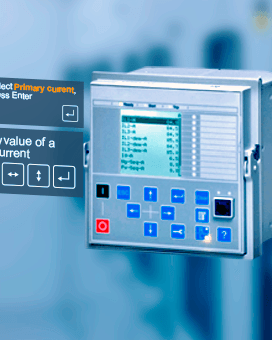
Feeder Protection Relay
Free demo
Power Distribution & Utilities
Feeder Protection Relay
The participants are able to configure a Feeder protection relay based on the ABB REF615 device.
View details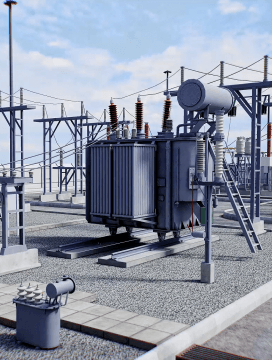
Subscribe
Power Distribution & Utilities
High Voltage Electrical Substation
Subscribe
Power Distribution & Utilities
High Voltage Electrical Substation
Power transmission and distribution Fundamentals, substation functions through VR safety training
View details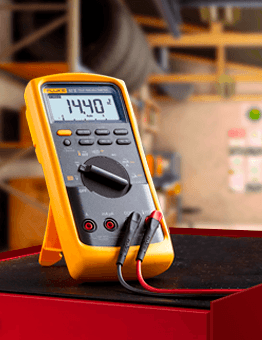
Subscribe
Electrical Safety
Digital Multimeter Basics
Subscribe
Electrical Safety
Digital Multimeter Basics
This VR training covers electrical measurement safety based on Fluke 87v multimeter in electrical testing.
View details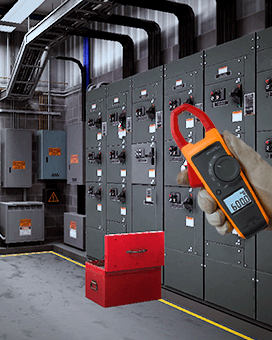
Subscribe
Electrical Safety
Motor Control Center Troubleshooting
Subscribe
Electrical Safety
Motor Control Center Troubleshooting
This VR experience takes through real-life scenarios involving MCC safety based on NFPA 70E.
View details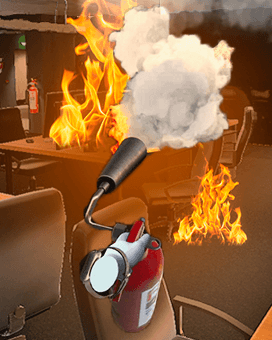
Subscribe
Fire Safety
Fire Safety and Emergency Response Training
Subscribe
Fire Safety
Fire Safety and Emergency Response Training
Immerse yourself in Fire Safety VR training and learn how to act quickly and effectively.
View detailsVR training benefits
X4
times
faster learning
52%
more
cost-effective
43%
reduction
workplace injuries
Key features


Getting started
3. Start training
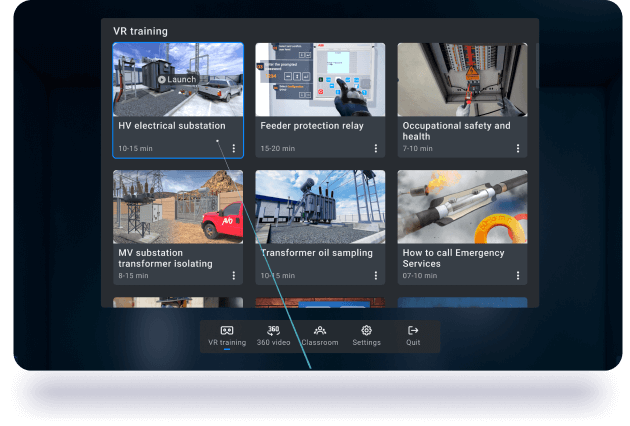
Navigate to the VR training tab. Choose and launch VR safety training.
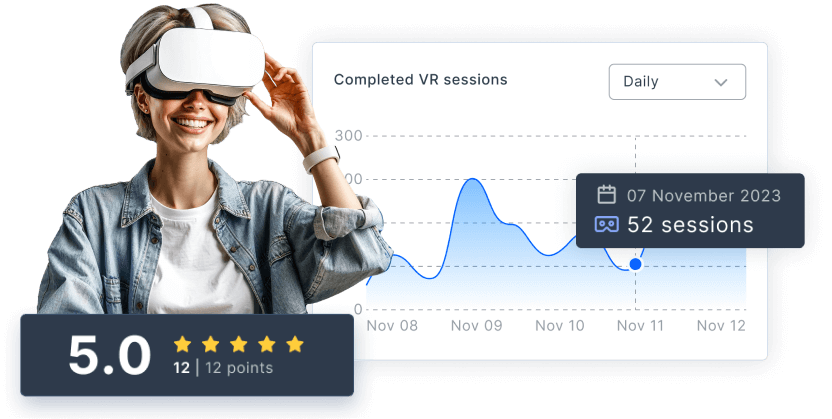




Frequently Asked Questions
Metaenga is a VR training platform for utilities, industrial teams, and training providers. Its library supports practice in electrical safety, equipment procedures, and workplace hazards.
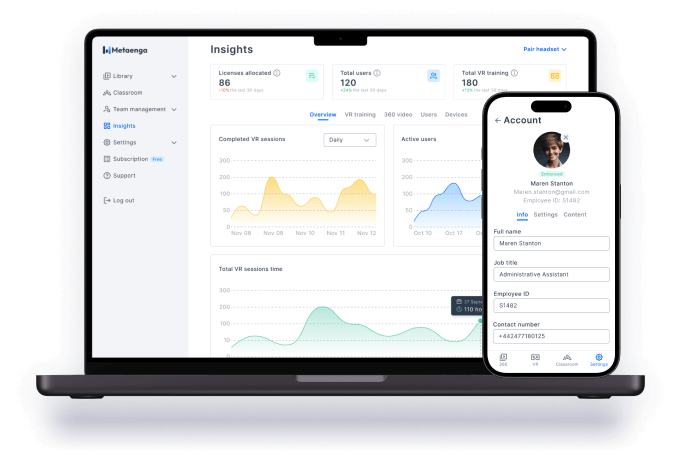
Training managers can organise VR content and review session results through a web dashboard. Choose relevant modules and check their learning objectives, assessment, languages, and headset requirements before planning a rollout.
Explore 20 VR training modules in the Metaenga library.
Topics include electrical safety, substations, isolation and LOTO, fire response, logistics, and work at height.
The platform also supports 360 video learning. Check each module page and the pricing page for content, language, device, and plan details.
Metaenga offers a Free plan with selected modules. The Standard monthly subscription is USD 99.00 per headset. Compare Flex, Standard, annual billing, and enterprise options on the pricing page. Adaptation and custom development are scoped separately.
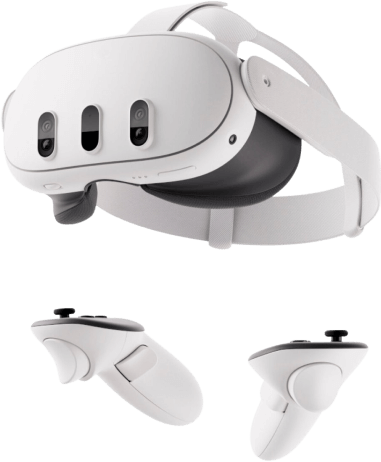
Metaenga offers VR training for Meta Quest and Pico 4 headsets.
Supported models vary by module. Check the module page and confirm compatibility before purchasing hardware.
Training managers use the web dashboard linked from metaenga.com to manage their organisation and content.
For mobile 360 video, ask about support for iOS and Android. Confirm the device and playback requirements for your training setup.
For help with subscription changes or cancellation, contact info@metaenga.com. Check your plan and the terms of service for the applicable billing and cancellation conditions.
Contact Metaenga to discuss existing content, adaptations, or custom VR development for your organisation.
Content compatibility, ownership, delivery, and support requirements are reviewed during scoping. A custom project is separate from library access.
Metaenga serves utility and energy teams, industrial operations, electrical training centres, and contractors with relevant safety and procedure training needs.
Training managers, instructors, and HSE teams can review the library for a fit with their curriculum or discuss a specific procedure. Start with the module objectives, supported devices, and assessment details.
VR provides repeatable practice with simulated equipment and hazards before supervised practical work. It can help instructors discuss missed steps and decisions. It complements hands-on training; completing a simulation does not by itself certify competence or authorise hazardous work.
Start with a defined training need and a small evaluation. Agree the modules, learner group, instructor role, hardware, and success measures. Review session results and learner feedback alongside delivery costs before deciding on a wider rollout.
Check each module page for its supported Meta Quest and Pico models. Headset requirements and available content can differ by module. Administrators use a web dashboard to manage training; this does not make every VR module playable in a browser.